
Australia is known for its hot summers. During periods of extreme heat, temperatures in some regions frequently exceed 35°C. For battery-powered electronic devices, prolonged exposure to high temperatures may affect performance and create safety concerns.
Vaping devices can also experience problems when exposed to high temperatures. Many vapes contain lithium-ion or other lithium-based batteries, electronic control circuits and heating components, all of which may be affected by excessive heat.
So, can Australia's hot summer weather really damage a vape battery? What happens if a device is left inside a hot car? And how can you recognise the signs of possible battery damage?
This article explains in detail how high temperatures affect vaping devices, the warning signs of battery damage to look out for, and important battery safety information.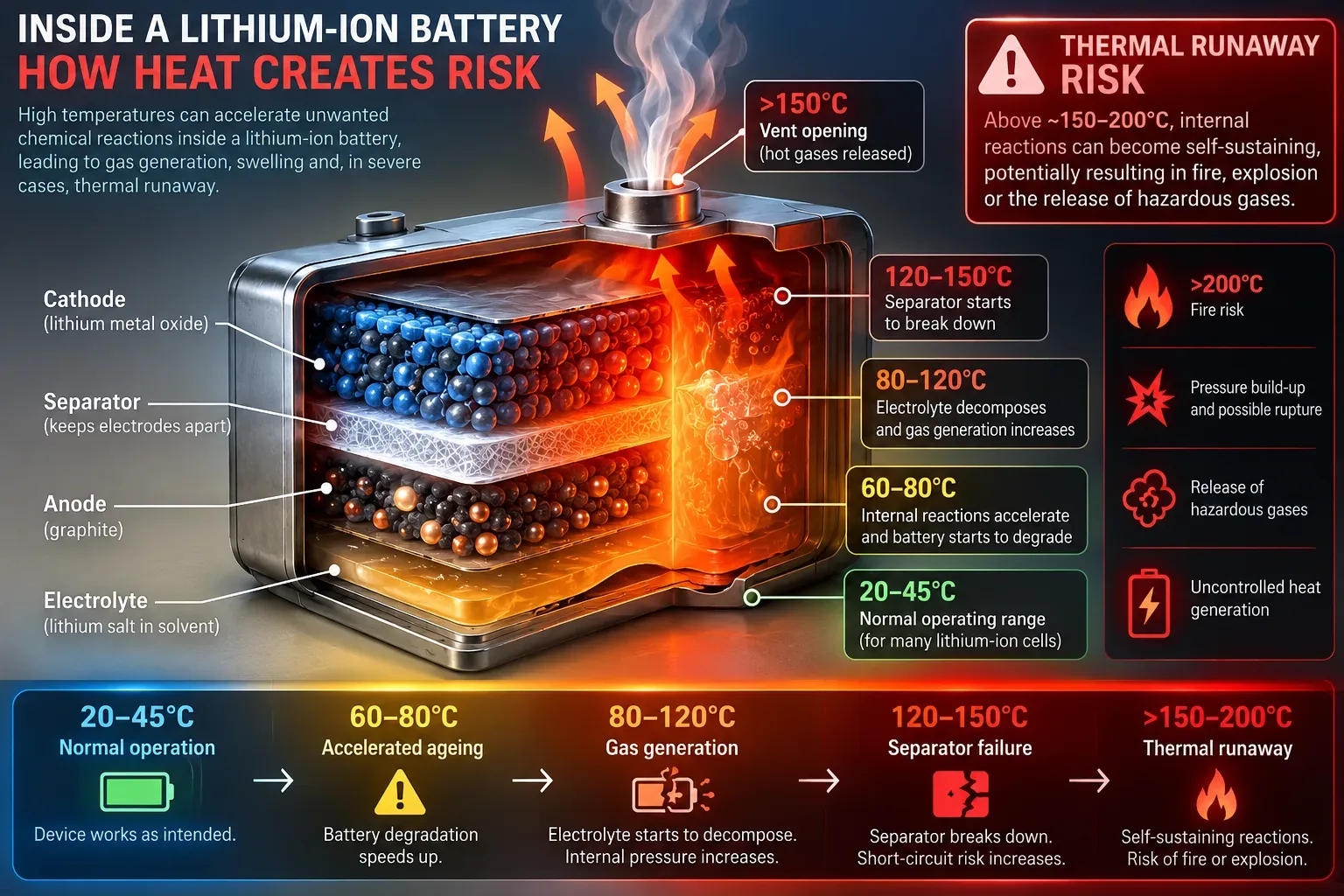
1. Can High Temperatures Damage a Vape Battery?
The answer is yes. Excessive heat can damage lithium-ion batteries and affect their performance, lifespan and safety.
Lithium-ion batteries rely on internal chemical reactions to store and release electrical energy. When a battery is exposed to high temperatures, certain chemical reactions that would not normally occur may accelerate.
Over time, this may lead to:
Reduced battery capacity
Faster battery ageing
Increased internal resistance
Shorter actual operating life
Battery swelling or physical damage
Increased risk of overheating and, in severe cases, fire
The extent of the damage depends on several factors, including the battery's chemistry, internal structure, current condition, ambient temperature and duration of exposure.
It is worth noting that even if a battery shows no obvious external damage, it may already be experiencing gradual degradation.
In addition, different devices do not respond to high temperatures in exactly the same way. Devices should always be stored within the operating and storage temperature ranges specified by the manufacturer.
2. Why Is Australian Summer Heat a Particular Concern?
Many regions across Australia experience high temperatures during summer, including New South Wales, Victoria, Queensland, South Australia and Western Australia.
During heatwaves, outdoor temperatures in some areas may exceed 35–40°C.
However, the actual temperature surrounding an electronic device may be much higher than the outdoor temperature reported in weather forecasts.
For example, if a vape is left in any of the following locations:
On the dashboard of a parked car
Inside a vehicle exposed to direct sunlight
Near a window receiving strong afternoon sunlight
On an outdoor table during a heatwave
Near a heater or another heat source
The device may be exposed to even higher temperatures.
Parked cars are particularly concerning. Even when the outdoor temperature is not extremely high, the temperature inside a vehicle exposed to sunlight can rise rapidly.
Therefore, leaving electronic devices containing lithium batteries inside parked cars may create safety risks that could otherwise be avoided.
3. What Happens Inside a Lithium-Ion Battery When It Gets Too Hot?
A lithium-ion battery contains several internal components, including electrodes, an electrolyte and a separator.
These components work together to store and release electrical energy.
Excessive heat may interfere with their normal operation.
Faster Chemical Ageing
High temperatures may accelerate unwanted chemical reactions inside the battery.
These reactions gradually reduce the battery's ability to store electrical energy.
As a result, a battery repeatedly exposed to high temperatures may lose capacity faster than one consistently kept within the recommended temperature range.
Increased Internal Resistance
Battery ageing and chemical changes may cause internal resistance to increase.
Higher internal resistance may affect the efficiency of electrical power delivery and generate additional heat during operation.
Gas Formation and Battery Swelling
Under certain fault or ageing conditions, gas may form inside a lithium-ion battery.
This may cause the battery to swell, deform or damage its casing.
If battery swelling is detected, the battery should be considered damaged and should not be used or charged.
Thermal Runaway
In severe cases, internal damage or overheating may trigger thermal runaway.
Thermal runaway occurs when heat-generating reactions inside a battery become self-sustaining and continue to intensify, potentially resulting in fire or the release of hazardous gases.
This is an important reason why damaged lithium batteries must be handled with particular care.
4. What Happens If You Leave a Vape Inside a Hot Car?
During an Australian summer, leaving a vaping device inside a parked car may expose it to temperatures far above normal ambient conditions.
Direct sunlight, poor ventilation and heat absorbed by the vehicle's interior can all cause the temperature inside the car to rise continuously.
Several parts of the device may be affected.
Battery: Excessive heat may accelerate battery ageing and increase unpredictable safety risks.
Electronic Control Circuit: High temperatures may affect electronic components and their reliability.
E-Liquid Reservoir: Heat may change the properties of the liquid and the pressure inside the container.
Seals and Internal Materials: Some materials may expand, deform or gradually deteriorate under high temperatures.
Even if a device looks normal after being removed from a hot car, its appearance alone cannot confirm that the battery or internal components have not been damaged.
If the device shows signs of abnormal heating, swelling, leakage or obvious physical damage, stop using it immediately.
Do not attempt to cool an overheated device rapidly by placing it in water or a freezer.
If damage is suspected, follow the manufacturer's safety instructions and seek appropriate professional advice.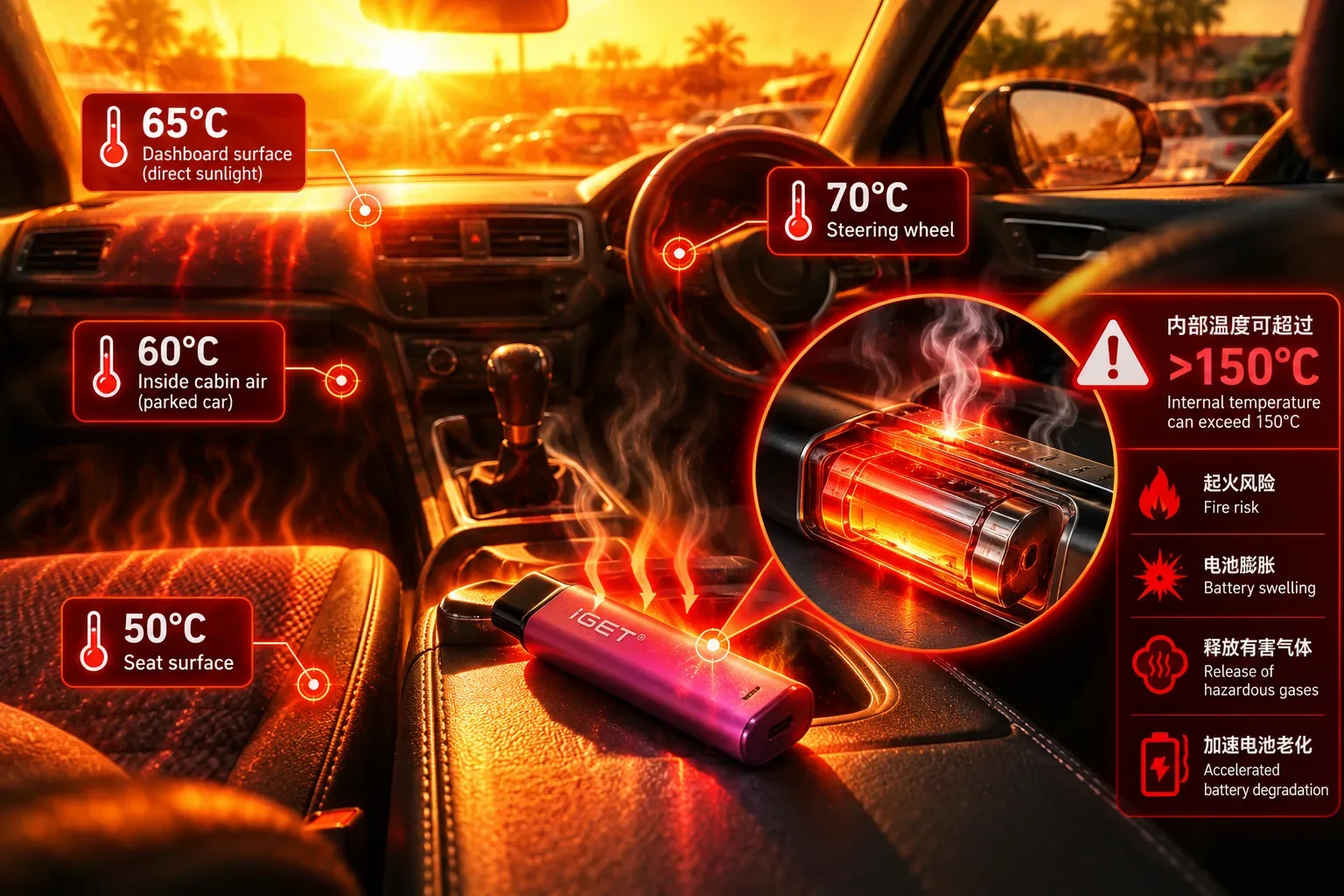
5. What Are the Warning Signs of Heat-Damaged Vape Batteries?
Battery damage is not always visible from the outside, but certain unusual symptoms may indicate a problem with the device.
| Warning Sign | Possible Cause |
|---|---|
| Unusual heating during storage or operation | Battery stress, electrical faults or other internal problems |
| Battery swelling or deformation | Possible internal gas formation or battery damage |
| Sudden reduction in battery life | Battery ageing, performance degradation or other electrical problems |
| Device leakage | Possible damage to the battery, e-liquid reservoir or seals |
| Unusual smells, smoke or hissing sounds | Possible serious battery or electrical failure |
| Visible damage to the casing | Possible physical damage to internal components |
These symptoms are not exclusive to heat damage and may also be caused by other factors. A visual inspection alone cannot reliably identify every internal fault.
Important Safety Reminder: If a device is smoking, making hissing sounds, swelling rapidly or becoming extremely hot, do not touch it. Keep people away and contact emergency services when appropriate.
In Australia, call 000 in an emergency.
6. Can Heat Still Affect Vape Performance If the Battery Continues to Work?
Yes. After exposure to high temperatures, a battery may still be able to activate the device normally, but its capacity may already have decreased or its ageing process may have accelerated.
For example, repeated exposure to high temperatures may cause gradual chemical degradation inside the battery.
However, a shorter operating time does not necessarily prove that the battery has suffered heat damage.
Other factors that affect battery performance include:
Battery age
The device's electrical power requirements
Heating element resistance
Frequency and duration of device activation
Manufacturing variations
The condition of the battery itself
Ambient temperature
Therefore, it is important to distinguish possible heat-related effects from other factors affecting performance.
The fact that a device continues to operate should not be taken as proof that its battery is still safe.
7. How Can You Reduce Heat-Related Battery Risks in Australia?
Taking some basic precautions can help reduce unnecessary exposure to high temperatures.
Avoid Leaving Devices in Parked Cars
Do not leave battery-powered vaping devices inside parked cars, especially during hot weather.
The temperature inside a car may be much higher than the surrounding outdoor environment.
Avoid Direct Sunlight
Do not leave devices for long periods on car dashboards, windowsills or other surfaces exposed to continuous sunlight.
Follow the Manufacturer's Temperature Limits
Different battery types and device designs have different operating and storage temperature requirements.
There is no single safe upper temperature limit that applies to all vaping devices.
Do Not Charge an Overheated Device
If a rechargeable device becomes unusually hot, do not connect it to a charger.
Charging a damaged or overheated lithium-ion battery may create additional safety risks.
Devices that do not support charging must never be charged.