
Knowing how to track parcel Australia shipments comes down to using the right number in the right place. Australia Post, Aramex, CouriersPlease and the larger freight networks all run public tracking pages that accept one consignment number, and that number arrives in your dispatch email rather than your order confirmation. An order number will not work on a carrier site: it belongs to the seller, while the consignment number belongs to the carrier moving the parcel.
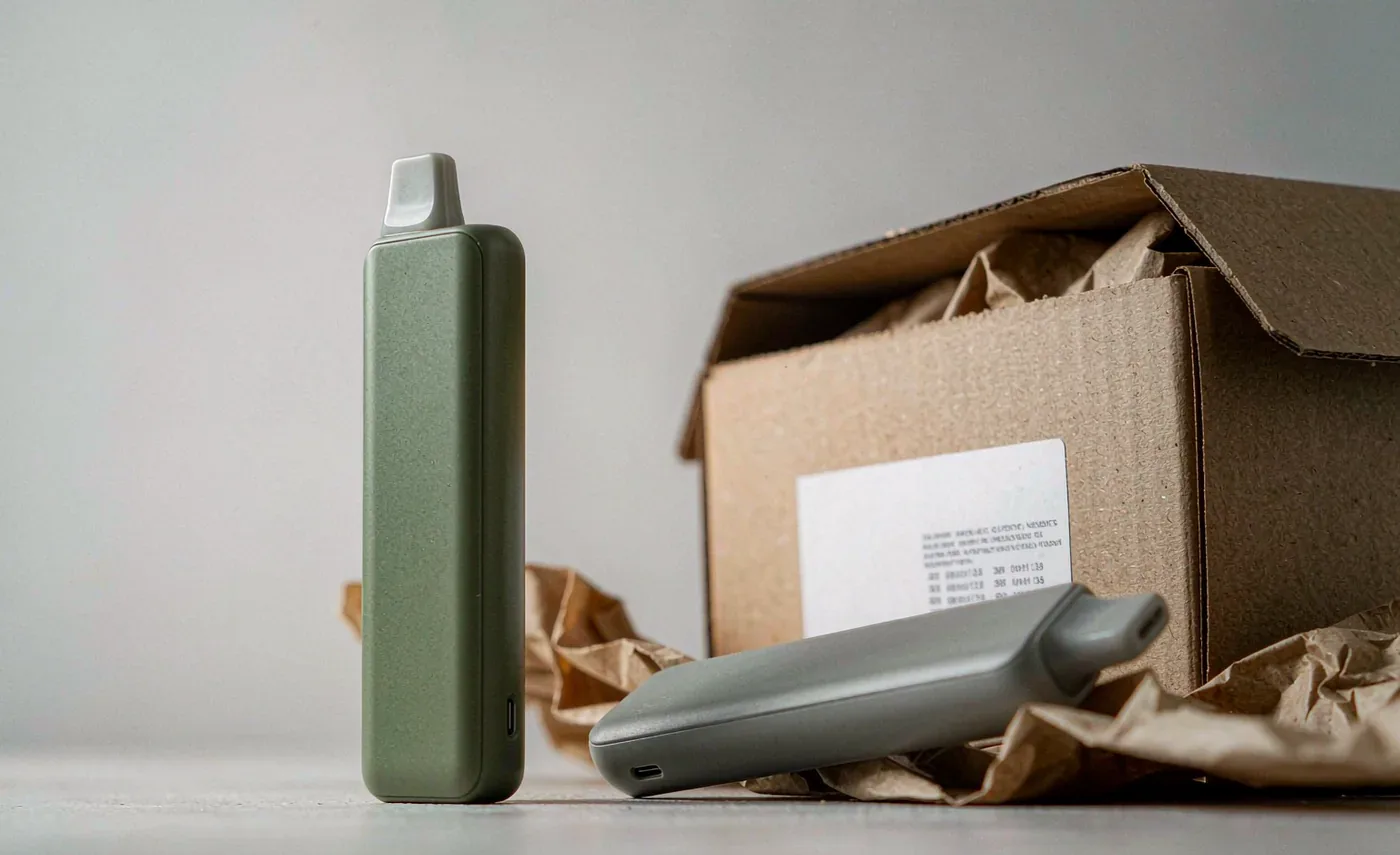
Two slim IGET devices and a plain parcel: the label number on the box is the one a carrier tracking page accepts.
Which number you actually need
Three references circulate after a purchase, and mixing them up is the most common reason a tracking search returns nothing.
- Order number — short, often five or six digits, used for support enquiries rather than carrier tracking.
- Consignment or tracking number — longer and alphanumeric, unique to one parcel, and the only one a carrier site accepts.
- Reference number — an optional field printed for the sender's own use; sometimes searchable, never guaranteed.
Paste the tracking number without spaces; hyphens are usually tolerated, trailing spaces are not.
Reading the status timeline
Wording varies between carriers, but almost every scan falls into one of six states.
- Manifested or label created — registered electronically, possibly still awaiting collection.
- Received in network — the first physical scan, where movement becomes real.
- In transit — between facilities, often scanned only at each end of a linehaul run.
- On board for delivery — with a driver; the only status that reliably means today.
- Awaiting collection — a delivery attempt failed and the parcel was carded.
- Delayed or exception — weather, a damaged label, an address query or a backlog.

An opened parcel mid-journey: the scan timeline usually goes quiet while a parcel waits between facilities.
Why a tracking page goes quiet
Silence is usually administrative rather than physical. Scans happen at facility boundaries, so a parcel can travel a full day between updates with nothing wrong. Weekend handling is reduced, and a Friday scan is often followed by nothing until Monday night. Bulk freight is also scanned by pallet rather than by item, so your parcel may only reappear once it is broken out for local delivery.
How long each stage normally takes
The fragile stages are the first and last legs: collection, then a delivery run in your suburb.
- Dispatch to first scan — same day to two business days.
- Metro to metro — one to three business days after the first scan.
- Interstate — two to five business days, with Western Australia and the Northern Territory at the longer end.
- Regional and remote — add two to four business days, with fewer scans along the way.
Our breakdown of IGET delivery times by state applies these windows to each destination, and the guide to how orders are packed and dispatched explains what happens before the first scan appears.
Checking the contents against the dispatch email is quicker once the parcel actually arrives.
When a delay is worth acting on
A useful test is whether the status has changed in the past three business days. If a parcel sits in transit and the estimated window has passed, another day of patience is usually right. If nothing has moved since the label was created, or an exception has sat unchanged for two business days, contact the sender with your order number, tracking number and postcode in one message. Carriers generally require the sender to open an investigation, since the delivery contract sits with whoever paid the postage.
If it says delivered but nothing arrived
Check the front door, side gate, letterbox, building concierge and any parcel locker used locally, then ask whether someone else in the household collected it. If it is still missing, ask the sender to request a delivery confirmation, which for many services includes a GPS timestamp and sometimes a photo of the drop location. Report it promptly — investigation windows are shorter than most people assume.
Keep a short, complete record
Save the dispatch email, the tracking number and a screenshot of the final status. That is enough for almost any resolution process. Adult customers ordering an IGET One 12000 or IGET Bar Pro 10000 should confirm the address before dispatch, since redirection adds days rather than hours. For background on ordering in Australia, see the IGET Australia guide.
Frequently asked questions
Can I track a parcel with just my order number?
No. Order numbers are internal to the seller. You need the consignment number from the dispatch email, or a tracking link the sender has shared.
Why does tracking still say "label created" after two days?
It usually means the parcel has not been scanned into the carrier's network yet, which is common for orders dispatched late in the week or when a pickup has been missed.
Do I need to sign for delivery?
It depends on the service chosen at checkout. Where a signature is required and nobody is home, the parcel is carded to a collection point.
How long should I wait before reporting a missing parcel?
Report it once the stated window has passed and tracking has not changed for three business days, or immediately if the status says delivered and the parcel is not there.
Last updated: November 2026. Carrier processes and scan wording change from time to time, so confirm details on the carrier's own tracking page. For adult users only.