
The sweetest IGET flavours sit in the candy and cream groups rather than the ice range. Chupa Chups grape and Chupa strawberry lead on perceived sweetness, creamy vanilla-style blends come next, and ripe mango, lychee and peach read sweet with more fruit lift and less sugar weight. Here is a profile-by-profile ranking for adult users, and why the same flavour tastes different in another hand.
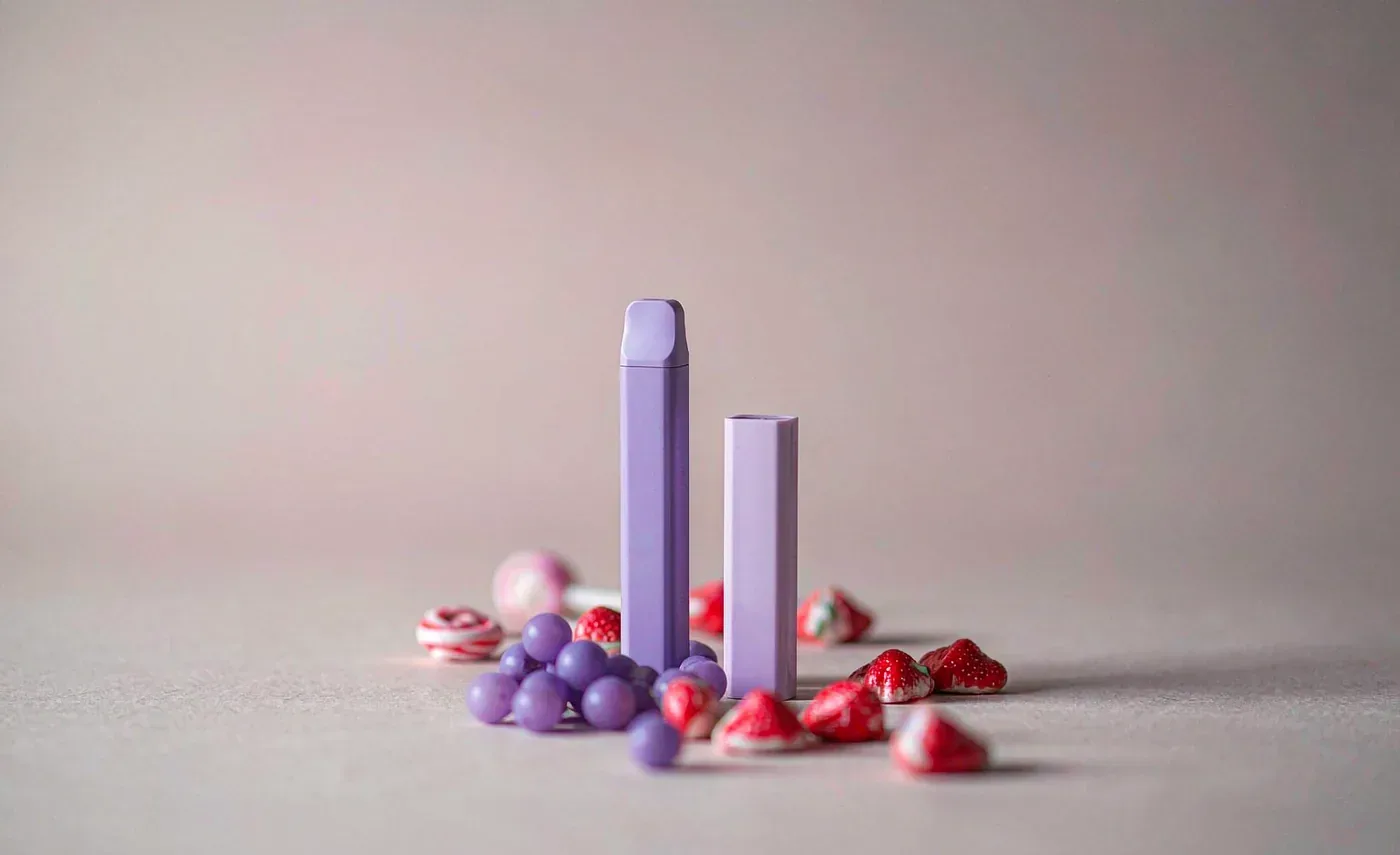
Two body styles, one candy-sweet family: the taller One 12000 and the shorter Bar Pro 10000.
What sweetness actually means in a disposable device
There is no sugar in the vapour. What you taste as sweetness comes from three things: how heavily the concentrate is loaded, how much cooling sits behind it, and which flavour family the blend belongs to. Candy profiles use rounded, low-acid notes the palate reads as sugary. Ice-heavy blends mute that impression, because menthol-type cooling registers as cold before it registers as sweet. A strongly cooled device can carry the same concentrate load and still taste half as sweet. Our IGET flavour range guide covers the families further.
The sweetest profiles, ranked
Ranking is by perceived sweetness on a normal draw, not by puff count or price. Draw habits shift the margins, but the order holds for most adult users.
Candy-style blends: the sweetest group
Chupa Chups grape and Chupa strawberry are the reference point for sweetness in this range. The profile is built around a lollipop rather than a fruit: a sugary front note that arrives immediately, a soft fruit middle, and very little cooling at the end. That absence of menthol is why the sweetness survives the whole puff. The IGET Bar Pro Chupa Grape is the compact route in; the IGET One 12000 Chupa Chupps Grape carries it in the larger body. Tasting notes for both are in what Chupa Chups flavour actually tastes like.
Cream and dessert blends: sweet, but softer
Vanilla-cream and milk-style blends land just under the candy group. Their sweetness is continuous and low in acid, so it reads smooth rather than bright. The trade-off is that a cream base coats the palate: rich on day one, noticeably flatter after a week of exclusive use. Rotating one cream blend with a fruit blend keeps both readable.
Ripe fruit blends: sweet with lift
Mango, lychee, peach and double apple are genuinely sweet, but they carry natural acidity alongside it. That acid lifts the profile and stops the sweetness sitting heavy, which is why these taste lighter than their concentrate load suggests.
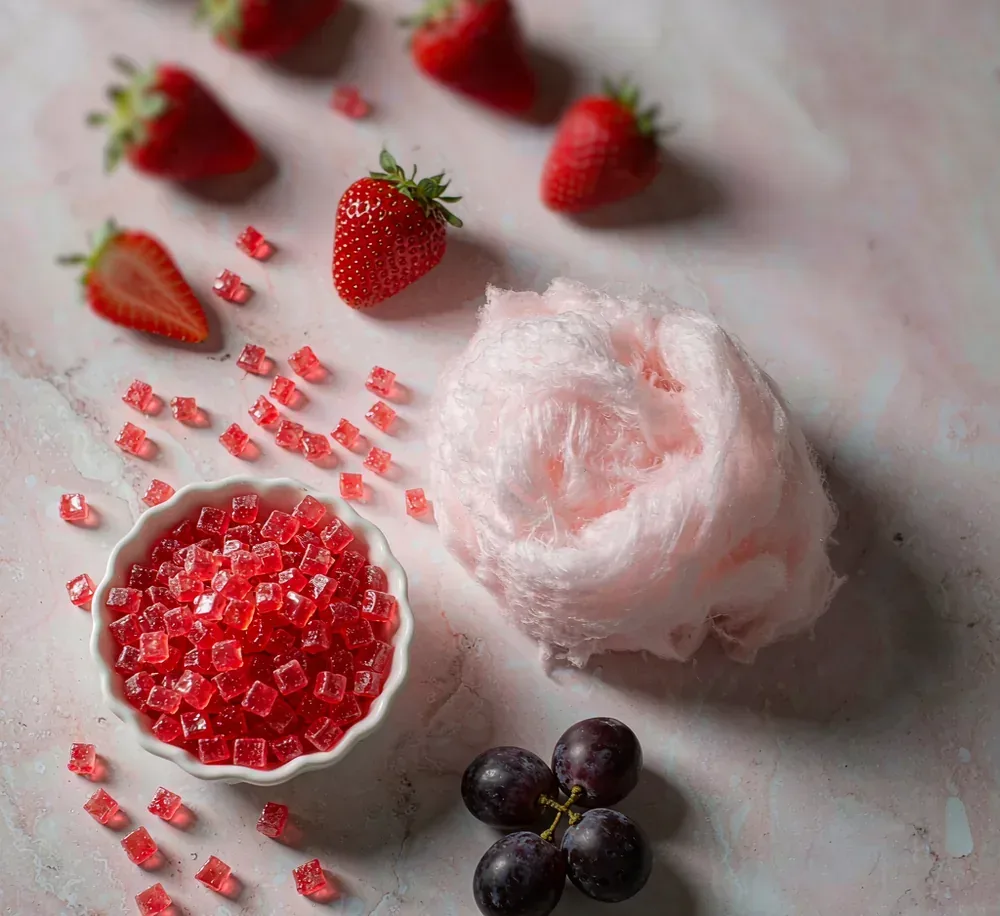
The cues candy profiles borrow from: strawberry candy, sugar crystals and dark grape.
Why the same flavour tastes sweeter to someone else
Draw technique does most of the work. A slow, longer draw pulls more vapour per puff and delivers a denser flavour load, so the same device tastes sweeter in one person's hand than another's, while a short hard draw dilutes it with air. Coil age matters too: output tapers across the life of a disposable, and the last third of the rated count usually tastes milder than the first. Contrast is the biggest factor. If you normally use menthol-heavy blends, any candy flavour will taste sweeter by comparison. Our ranking of IGET ice levels covers that cooling scale.
How the device body changes the delivery
The IGET One 12000 has the taller body and a longer airflow path, which softens the front note and stretches sweetness across the puff. The IGET Bar Pro 10000 is shorter and wider, with a tighter draw that concentrates flavour at the start. A candy blend tastes more immediate in the Bar Pro and more layered in the One. Our One 12000 versus Bar Pro comparison sets them side by side.
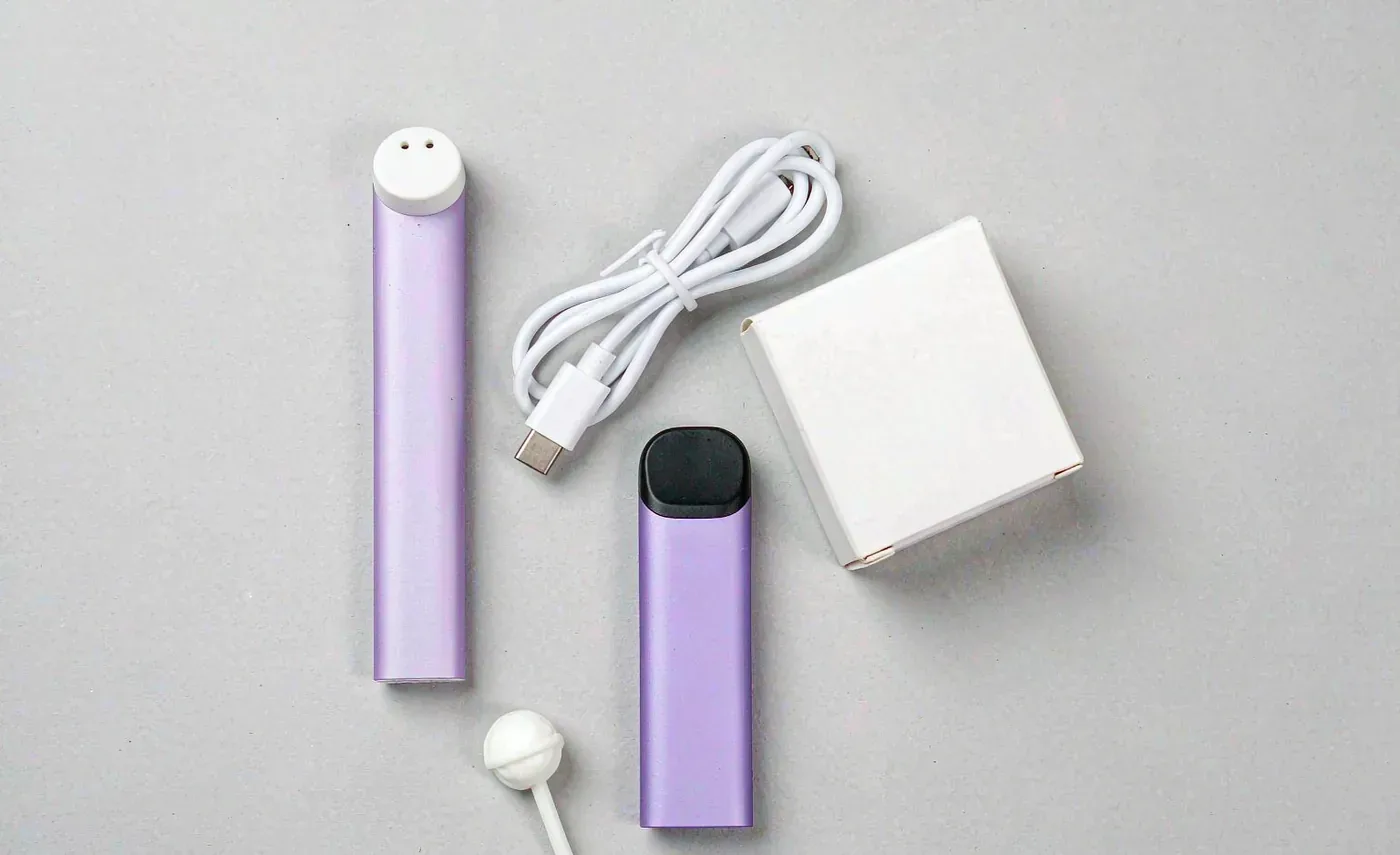
Flat-lay detail: the two device bodies with USB-C charging and plain packaging.
Choosing without overthinking it
- Maximum sweetness: a Chupa Chups variant, grape for a darker candy note, strawberry for a softer one.
- Sweetness with texture: a cream blend, used in rotation rather than exclusively.
- Sweet but drinkable all day: mango, lychee or peach, where fruit acid keeps it from cloying.
- Unsure: one candy blend and one fruit blend in the same body, compared over a week.
Flavour names describe a style, not a recipe, and batch variation shifts intensity slightly between runs.
Frequently asked questions
Are the sweetest IGET flavours also the strongest?
Not necessarily. Sweetness and flavour strength are separate readings, so a candy blend can taste very sweet at moderate intensity.
Do sweet flavours fade faster than ice flavours?
They fade differently. Cooling agents hold their edge longer than delicate candy top notes, so a sweet blend loses its front note first.
Is a sweeter flavour better for a first purchase?
It is a fair starting point if you already like sweet drinks or desserts, because the profile is familiar. If you prefer dry or bitter tastes, a fruit blend with visible acidity will sit closer.
Can I make a sweet flavour taste less intense?
A lighter, shorter draw reduces vapour density per puff, and alternating with a drier fruit profile resets the palate.
Last updated: November 2026. Flavour notes are subjective impressions for adult users aged 21 and over; devices can vary slightly between batches.