
Introduction
Have you ever noticed small droplets of liquid around the mouthpiece or airflow opening of an electronic vapour device?
This may be condensation. When an aerosol cools, some of its components may form liquid droplets again on cooler internal surfaces, potentially producing condensation.
However, not all signs of moisture are caused by condensation. E-liquid leakage, damaged components and other component failures can also produce similar symptoms.
Understanding these possible causes can help explain why moisture appears around a device and when it may indicate a problem.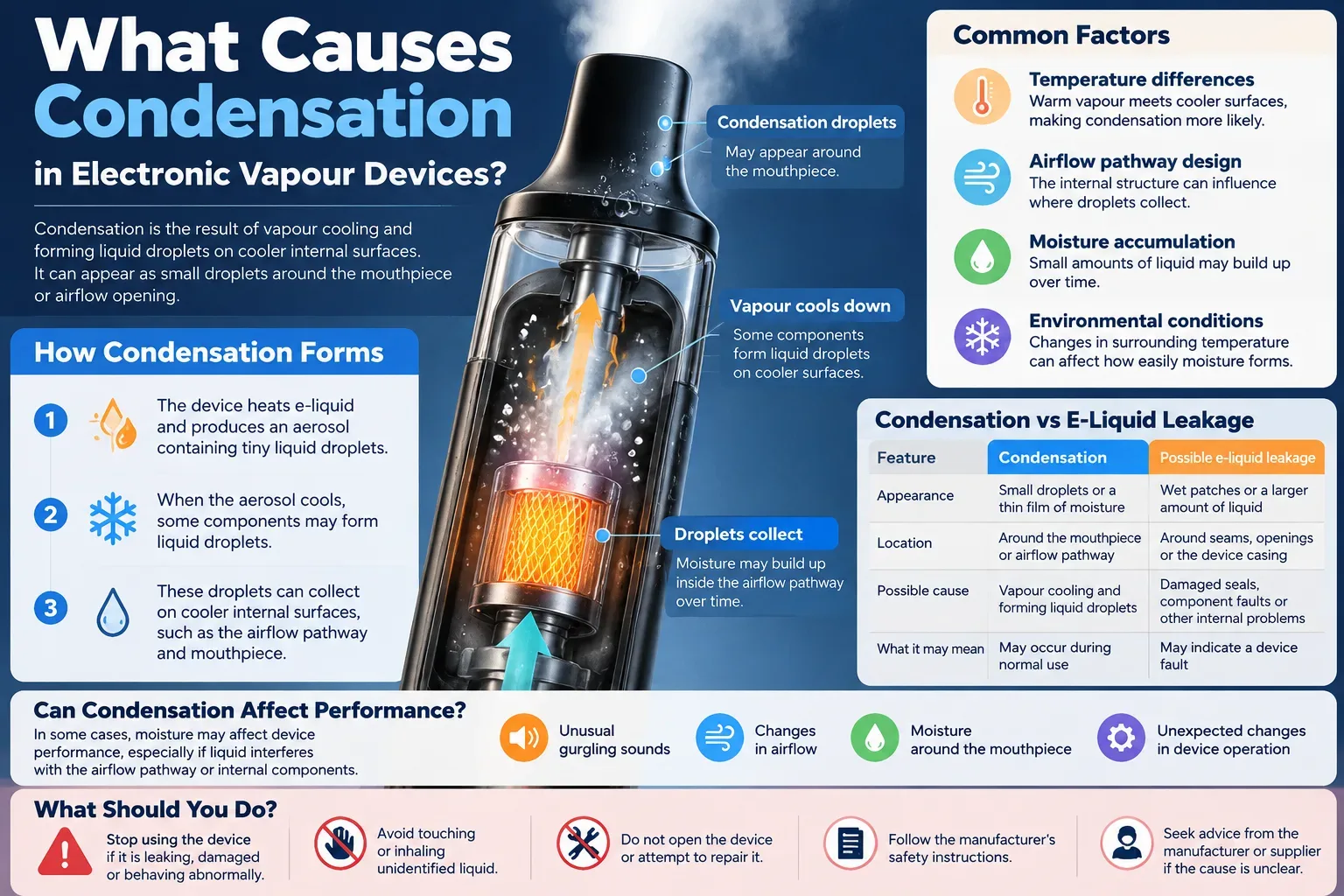
1. How Does Condensation Form Inside a Device?
Condensation may occur when an aerosol cools sufficiently for some of its components to form liquid droplets, resulting in the accumulation of condensation.
During operation, an electronic vapour device produces an aerosol consisting of liquid droplets and other substances. Some of these substances may collect on cooler surfaces inside the airflow pathway.
Over time, this accumulated moisture may form small droplets around internal passages, the mouthpiece or the airflow opening.
The amount of condensation may vary depending on the device design, operating conditions, temperature differences and the characteristics of the aerosol.
2. What Factors Can Contribute to Condensation?
Several factors may influence moisture accumulation inside an electronic vapour device.
Temperature differences: When warm aerosol comes into contact with cooler surfaces, condensation may form more readily.
Airflow pathway design: The shape and arrangement of internal airflow passages may influence where droplets collect.
Moisture accumulation: Small amounts of liquid may gradually build up over time, making condensation more noticeable.
Environmental conditions: Changes in the surrounding temperature may affect how readily moisture forms on internal surfaces.
These factors may contribute to condensation, but they cannot establish that every instance of liquid around a device is caused by condensation.
3. What Is the Difference Between Condensation and E-Liquid Leakage?
Condensation and e-liquid leakage may look similar, but they are not the same phenomenon.
| Feature | Condensation | Possible e-liquid leakage |
|---|---|---|
| Appearance | Small droplets or a thin film of moisture | Wet patches or a larger amount of liquid |
| Location | May appear around the mouthpiece or airflow pathway | May appear around seams, openings or the device casing |
| Possible cause | Liquid droplets forming as aerosol cools | Damaged seals, component failures or other internal problems |
| What it may indicate | May occur during normal device operation | May indicate a device fault |
These are general observations rather than definitive diagnostic criteria. The appearance and location of the liquid alone cannot confirm whether it is condensation or leaked e-liquid.
If moisture continues to appear, the amount of liquid is substantial, or the device shows abnormal behaviour, stop using it and seek appropriate guidance.
4. Can Condensation Affect Device Performance?
In some circumstances, moisture accumulation may affect device operation, particularly if liquid interferes with an airflow passage or an internal component.
Possible symptoms include:
Unusual gurgling sounds
Changes in airflow
Moisture around the mouthpiece
Unexpected changes in device operation
However, these symptoms may also have other causes. The presence of condensation alone does not prove that the device has developed a fault or that its components are damaged.
Do not dismantle the device or attempt to clean inaccessible internal electronic components. If the device becomes unusually hot, leaks substantial amounts of liquid or behaves abnormally, stop using it.
5. What Should You Do If You Notice Liquid Around a Device?
If you notice moisture from an unknown source, prioritise safety rather than attempting to repair the internal structure yourself.
Stop using the device if it is leaking, damaged or behaving abnormally.
Avoid touching or inhaling unidentified liquid.
Do not open the device casing or attempt to repair the battery or internal electronic components.
Follow the manufacturer's safety instructions.
If the cause remains unclear, seek advice from the manufacturer or supplier.
If the device is damaged or its battery may be affected, keep it away from heat sources and combustible materials. Follow local safety guidance when handling or disposing of damaged battery-powered electronic products.
Frequently Asked Questions (FAQ)
How Does Condensation Form Inside Electronic Vapour Devices?
When an aerosol cools, liquid droplets may collect on cooler internal surfaces, including parts of the airflow pathway, forming condensation.
Is Condensation the Same as E-Liquid Leakage?
No. Condensation forms when aerosol cools, while e-liquid leakage may result from damaged seals, component failures or other internal problems. The two can look similar.
Can Condensation Cause Airflow Problems?
In some circumstances, moisture accumulation may contribute to airflow problems. However, restricted airflow can have other causes, so condensation alone cannot establish the underlying problem.
Why Is There Liquid Around the Mouthpiece?
The liquid may be condensation, but e-liquid leakage or another device problem is also possible. If moisture persists or the device behaves abnormally, stop using it and seek appropriate guidance to determine whether the device remains safe to use.
Should I Open a Device to Remove Internal Condensation?
No. Opening the device casing may expose internal electronic components and the battery. Follow the manufacturer's instructions and do not attempt internal repairs, as doing so could damage internal components.
Conclusion
Condensation may occur in electronic vapour devices when an aerosol cools and forms liquid droplets on internal surfaces. Temperature differences, airflow pathway design and environmental conditions may influence where moisture accumulates.
Although small amounts of moisture may resemble condensation, liquid around a device may also indicate leakage or a device fault. The appearance of the liquid alone cannot establish its actual cause.
Understanding the difference between condensation and possible leakage can help determine whether a device requires further inspection. If a device is damaged, leaks substantial amounts of liquid or behaves abnormally, stop using it and follow the manufacturer's safety guidance.