
Does charging frequency affect disposable vape performance? Only slightly. Puff count is set by e-liquid and coil, not by how often you top up the battery. What charging frequency does change is battery health and heat exposure — and those can quietly shape how a device behaves in its final days.
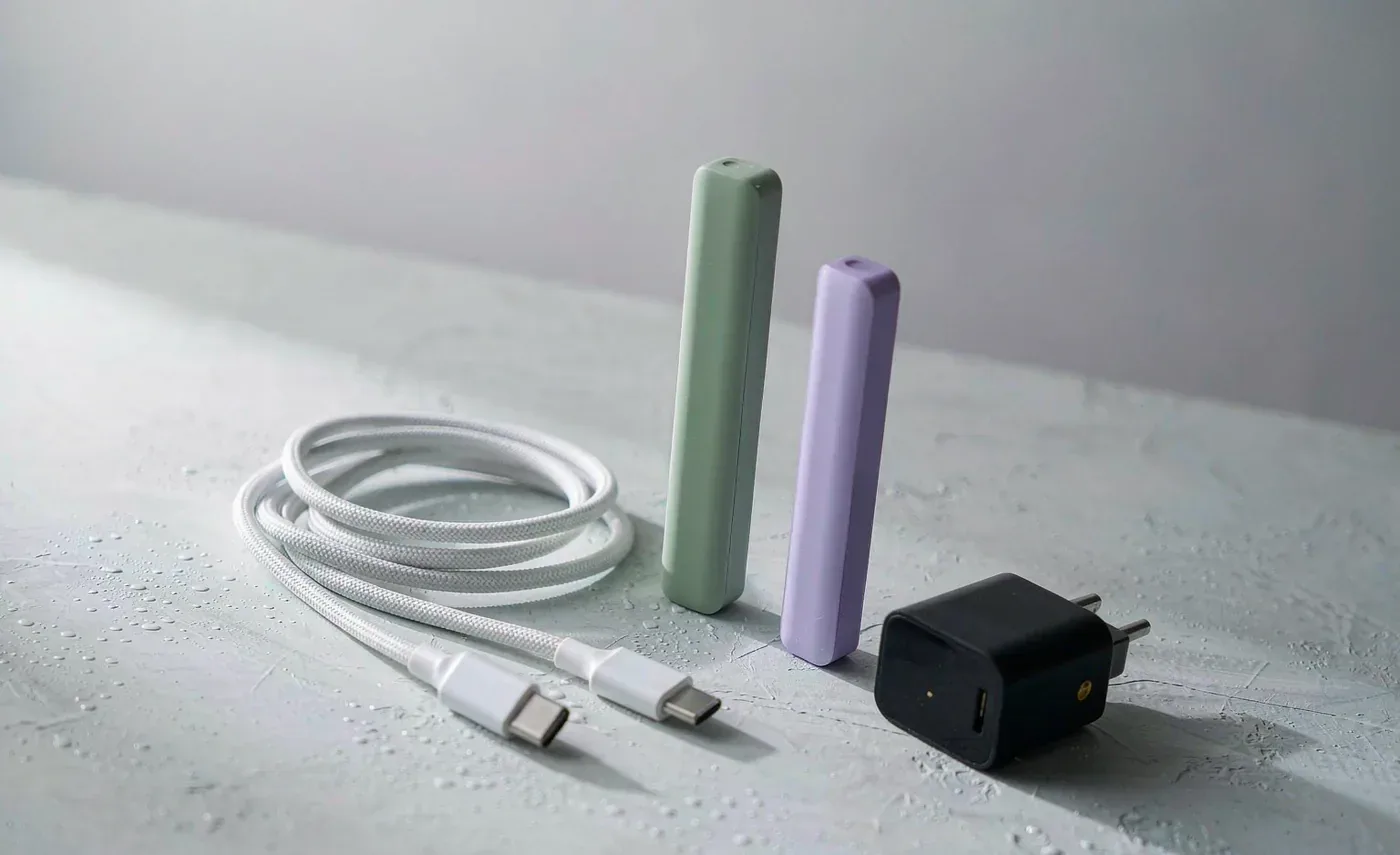
Two body sizes, one charging routine: short top-ups beat long overnight sessions.
The practical answer: charge when the device asks, avoid long overnight sessions, and do not treat a top-up as a performance upgrade.
What "charging frequency" means on a disposable
A rechargeable disposable like the IGET One 12000 has three relevant parts: a lithium cell, a small charge controller, and a USB-C port. The controller stops the charge at a set voltage, so you cannot overfill the battery the way people once feared with older electronics. There is no memory effect either — lithium cells do not need full discharge cycles.
So the question is really about habits: how low you let the cell run, how long you leave it plugged in, and whether you charge in a hot room or a cold car.
Why it does not change your puff count
Puff count is a function of liquid volume, coil efficiency and how hard you draw. A full battery and a half-full one deliver much the same aerosol until voltage sags near the end of a charge. Topping up twice a day does not unlock extra puffs; it spreads the same energy across more sessions.
At the low end a nearly flat cell produces weaker vapour, which invites longer draws, and longer draws use more liquid. That is a draw-style effect wearing a charging costume. Our guide to how long a disposable vape lasts covers the variables that genuinely move the number.
What charging frequency does affect
- Cell age. Every full cycle adds a little wear. Frequent brief top-ups are gentler than repeated deep discharges.
- Heat. Charging generates warmth, and a device charged in direct sun or on a dashboard accumulates more of it. Heat accelerates both battery and e-liquid degradation — the mechanism covered in can hot weather damage a vape battery.
- Port wear. Each plug-in cycles the connector. Fewer sessions mean less stress on a part that is not designed to be rebuilt.
A routine that suits the hardware
Charge when the indicator asks, not on a fixed daily schedule. A 30 to 45 minute session on a standard 5V charger covers most partial top-ups, and unplugging there avoids the trickle phase where heat lingers longest. Skip fast-charge bricks and car outlets that spike; the controller copes, but it works warmer.
Do not vape while charging. The coil and the charging circuit then add heat to the same small body, and with a low liquid level that is the quickest route to a harsh, dry taste. If the indicator blinks instead of holding steady, the pattern usually points to a connection problem rather than a flat cell — a blinking light on an IGET explains how to read it.
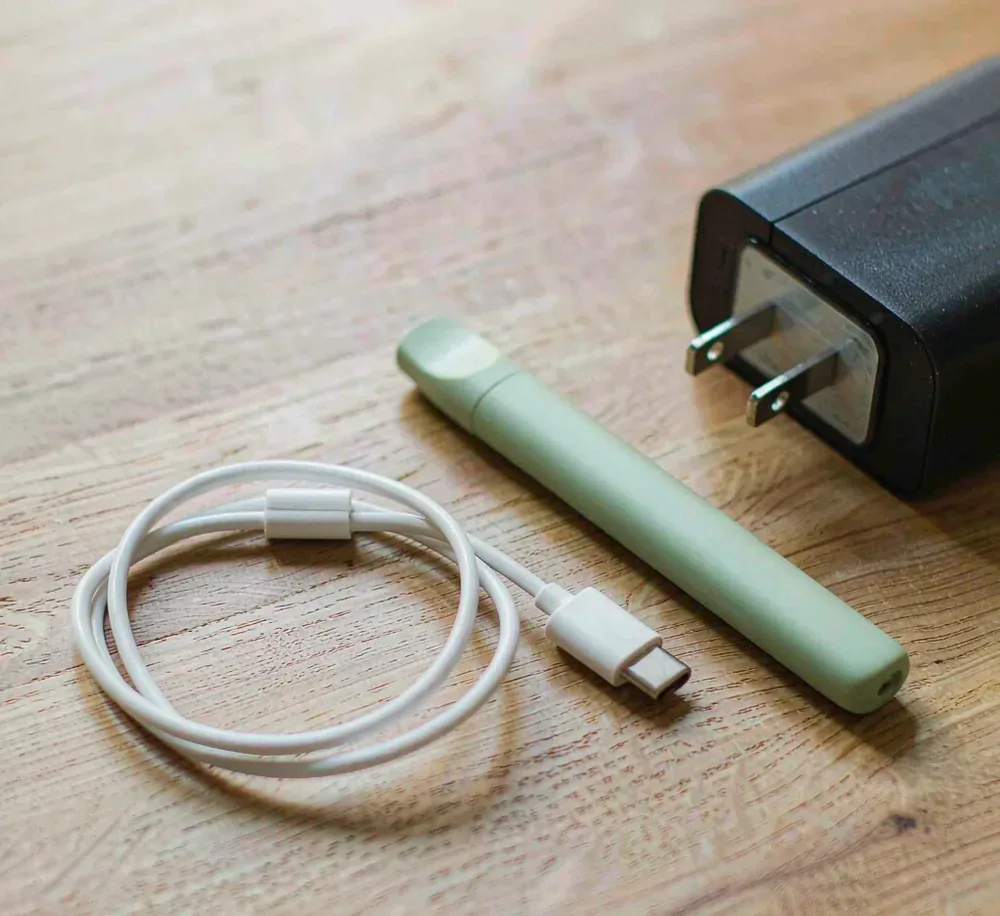
A cool, dry surface and a measured session: the charger handles the rest.
Signs you are charging too often or too long
A device that holds charge for under an hour after a full session is telling you the cell has aged, not that the charger is failing. A body still noticeably warm long after unplugging points to heat soak from the room. A port that needs the cable held at an angle is mechanical wear — the subject of our walkthrough on why an IGET will not charge. If nothing charges at all, test the cable and the wall source before writing off the device.
Two devices, two rhythms
Larger cells take longer to fill and tolerate fewer full cycles per week. The IGET Bar Pro 10000 sits in a shorter body and suits short, frequent top-ups between sessions, while the taller One 12000 carries more liquid and capacity, so one mid-week charge often sees it through. Neither benefits from an overnight session.
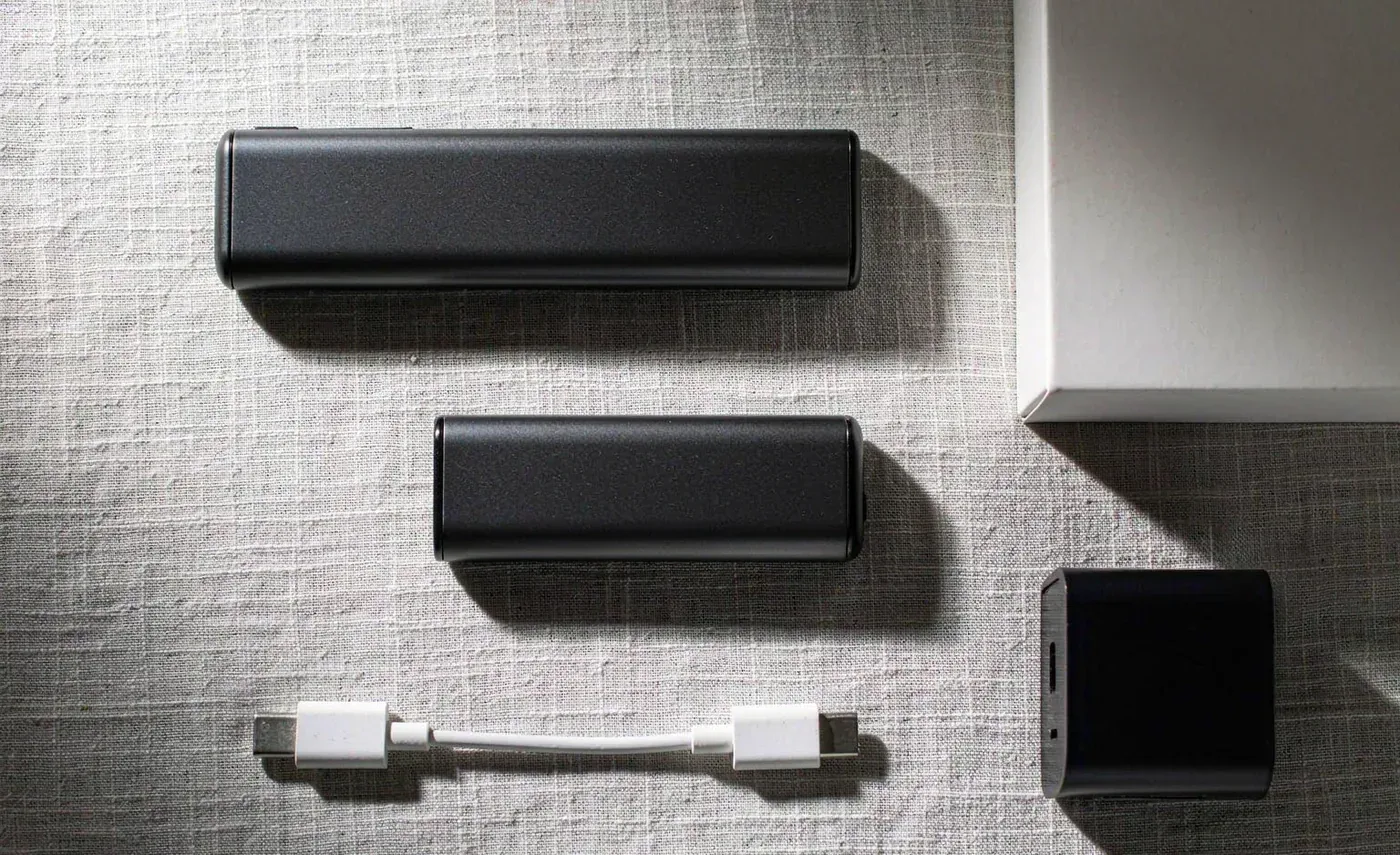
Body length and liquid capacity differ; both settle into the same short-charge habit.
Flavour makes no difference to charging behaviour, but it changes how often a device is picked up. A sweeter profile such as Bar Pro 10000 Chupa Strawberry tends to be used in shorter, more frequent sessions — in practice, more small top-ups and fewer deep discharges.
Frequently asked questions
Is it bad to charge a disposable vape before it runs out?
No. Lithium cells have no memory effect, and partial top-ups cause less wear than repeated deep discharges. Charge when convenient rather than waiting for the indicator to flash.
Can I leave a disposable charging overnight?
The controller stops the charge at full, so the risk is heat rather than overflow. Even so, hours of unnecessary warmth on a warm surface shortens both cell and e-liquid life.
Does charging more often make the flavour weaker?
Not directly. Flavour fades with coil age, liquid level and heat exposure. A device that tastes flat after repeated charging has usually been sitting somewhere warm, or is near the end of its liquid.
How long should a full charge take?
Roughly 45 to 90 minutes on a standard 5V charger, depending on cell size and how depleted it was. Anything finishing in minutes usually means a cable or port not making proper contact.
Last updated: November 2026