
The disposable vs pod system choice comes down to one question: do you buy hardware once and top it up, or buy a sealed unit and replace it when it runs dry? A disposable arrives pre-filled and pre-charged, works until the e-liquid or battery ends, then gets discarded. A pod system pairs a reusable battery with replaceable pods, so you keep the body and swap the pod. Disposables win on simplicity; pod systems win on long-run cost and flavour flexibility, at the price of charging and buying pods separately.
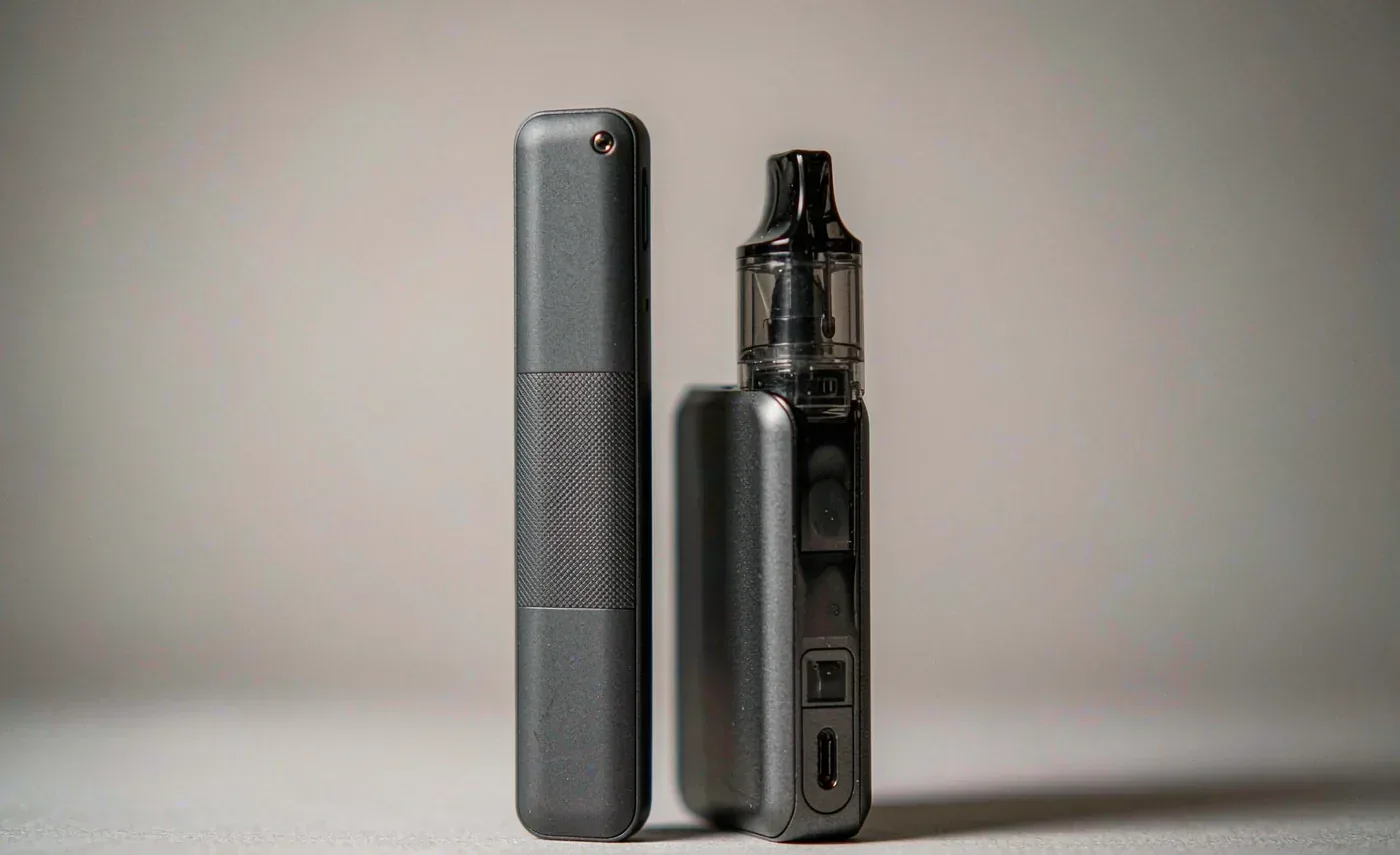
A sealed disposable bar next to a reusable pod device — the two formats most adult users compare.
What Each Format Actually Is
A disposable is a complete unit: e-liquid, coil, airflow and battery sealed inside one chassis. There is no fill port, no pod to click in — you draw and it fires. Capacity is fixed at manufacture, which is why models are sold by puff estimate, such as the IGET Bar Pro 10000 or the larger IGET One 12000. Once the coil or the charge is spent, the device is finished.
A pod system is two parts. The body holds the battery and charging port; the pod holds e-liquid and coil. When a pod tastes spent you remove it and seat a new one — some are pre-filled, others refillable. The body stays with you across many pods, which is the defining difference.
The Practical Differences
- Upfront cost. A disposable is a single low-commitment purchase. A pod system costs more on day one because you are buying hardware meant to last months.
- Ongoing cost. Pods usually work out cheaper per millilitre than buying a whole new device each time, so heavy users tend to spend less over a year.
- Maintenance. Disposables need nothing. Pod systems need charging, occasional contact cleaning, and prompt pod replacement to avoid a burnt taste.
- Choice. A disposable locks you to the flavour inside it. Pod systems let you change flavour by changing pod.
- Waste. Disposables generate a whole device per cycle, including a battery. Pod systems concentrate the disposable part into a smaller pod.
If service life matters most, our breakdown of how long a disposable vape lasts is worth reading before you commit.
Draw, Vapour and Flavour
Disposables are tuned at the factory for one airflow and power level, so the experience is consistent but not adjustable — usually a mouth-to-lung draw with modest vapour. Pod systems often offer adjustable airflow and sometimes two power settings, so you can move between a discreet draw and something fuller.
Flavour delivery depends more on the coil and e-liquid than on the category — a mesh coil in a well-made disposable can taste as clean as a pod. Our guide to the IGET flavour range explains how fruit, menthol and candy profiles are grouped if you are comparing options.

Flavour choice is where the two formats diverge most: sealed versus swap-and-refill.
Cost Over a Year
The maths is straightforward once you know your habit. Count how many disposables you finish in a month and multiply by twelve. For a pod system, add the body once, then estimate pods per month. Light users who finish one bar every three or four weeks often find the gap small; daily users usually find pods pull ahead within a few months.
Puff counts are estimates, not guarantees: draw length, frequency and storage all shift the real number, as covered in 10,000 vs 12,000 puffs.
Which Format Suits Which Habit
Choose a disposable if you want no maintenance, no charging routine and no parts to track — travel and occasional use favour it. Choose a pod system if you use daily, want to switch flavours freely, or prefer adjusting airflow. Our comparison of ranges and formats covers how the hardware lines differ in size and draw.
Before You Buy Either
Check three things. Charging: most current devices use USB-C, and a correct charger matters more than a fast one. Storage: heat is the common cause of leaking and weak performance, as explained in our note on condensation in vapour devices. Local rules: nicotine products are regulated differently by state and territory, and our IGET guide for Australian users summarises what to check before ordering.
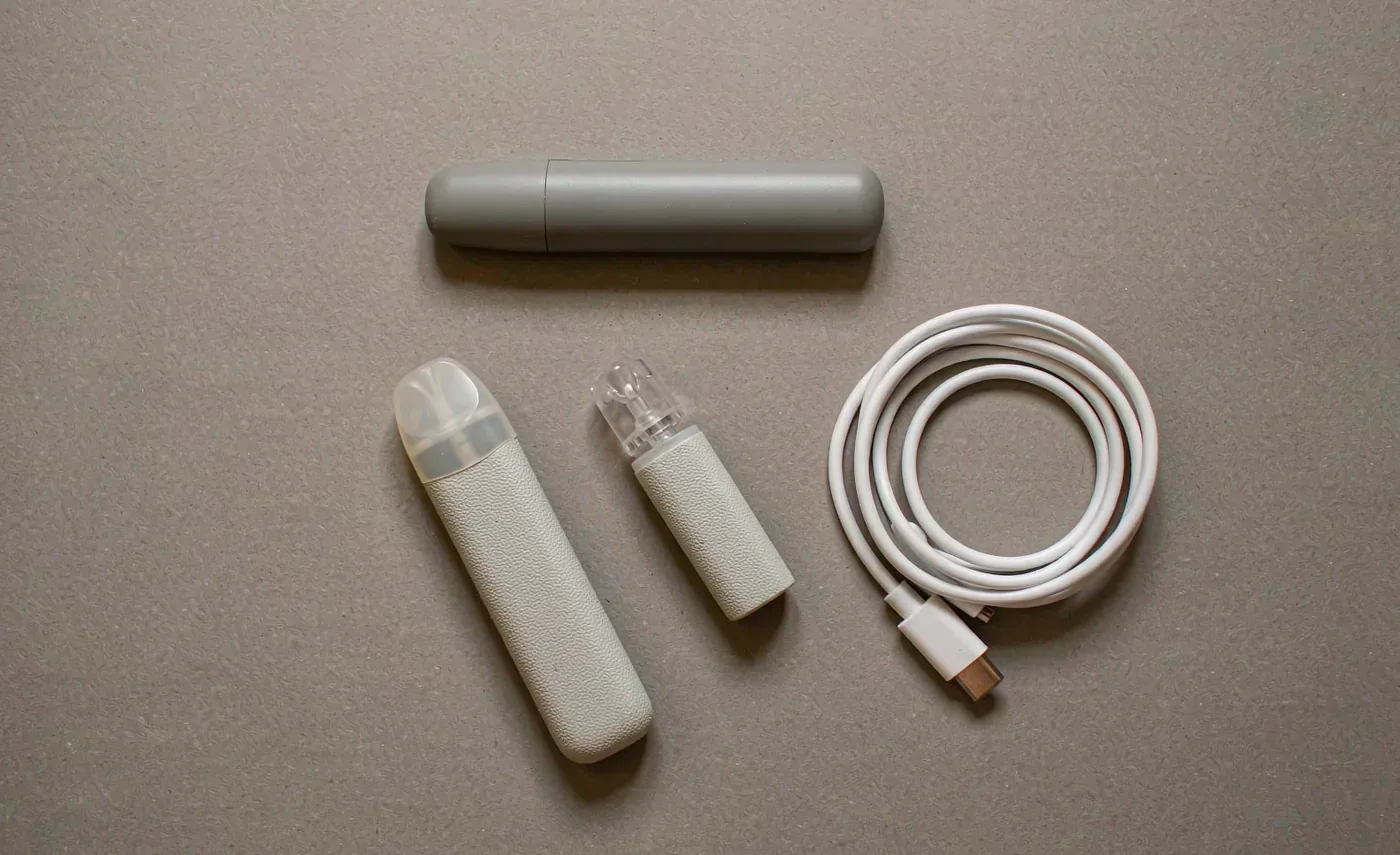
Body, pod and charging port: the parts a pod system owner maintains that a disposable user never touches.
Frequently Asked Questions
Is a pod system cheaper than a disposable?
Over time, usually yes for regular users, because you replace small pods rather than a full device. For someone who finishes one disposable a month, the gap may be modest and convenience may matter more.
Can you refill a disposable?
No. Disposables are sealed at manufacture with no fill port, and opening one risks damaging the coil or battery. If flavour switching matters, a pod system is the appropriate format.
Do pod systems produce more vapour?
Not automatically. Vapour volume follows coil resistance, power and airflow, so a low-power pod can be as discreet as a disposable. Pod systems simply give you more control over those variables.
Which is easier to travel with?
Disposables, because there is nothing to charge or clean and no bottle of e-liquid to pack. Pod systems are still portable but need a charged body, spare pods, and attention to battery rules on flights.
Last updated: November 2026