
IGET leaking is almost always one of three things: built-up condensation rather than real e-liquid, a device that has been stored on its side or in the heat, or a device that has simply reached the end of its life. A few drops around the mouthpiece are common and usually harmless; a steady leak is not, and in most cases it means the device is finished. Here is how to tell the difference, what you can safely do, and when to stop using it.
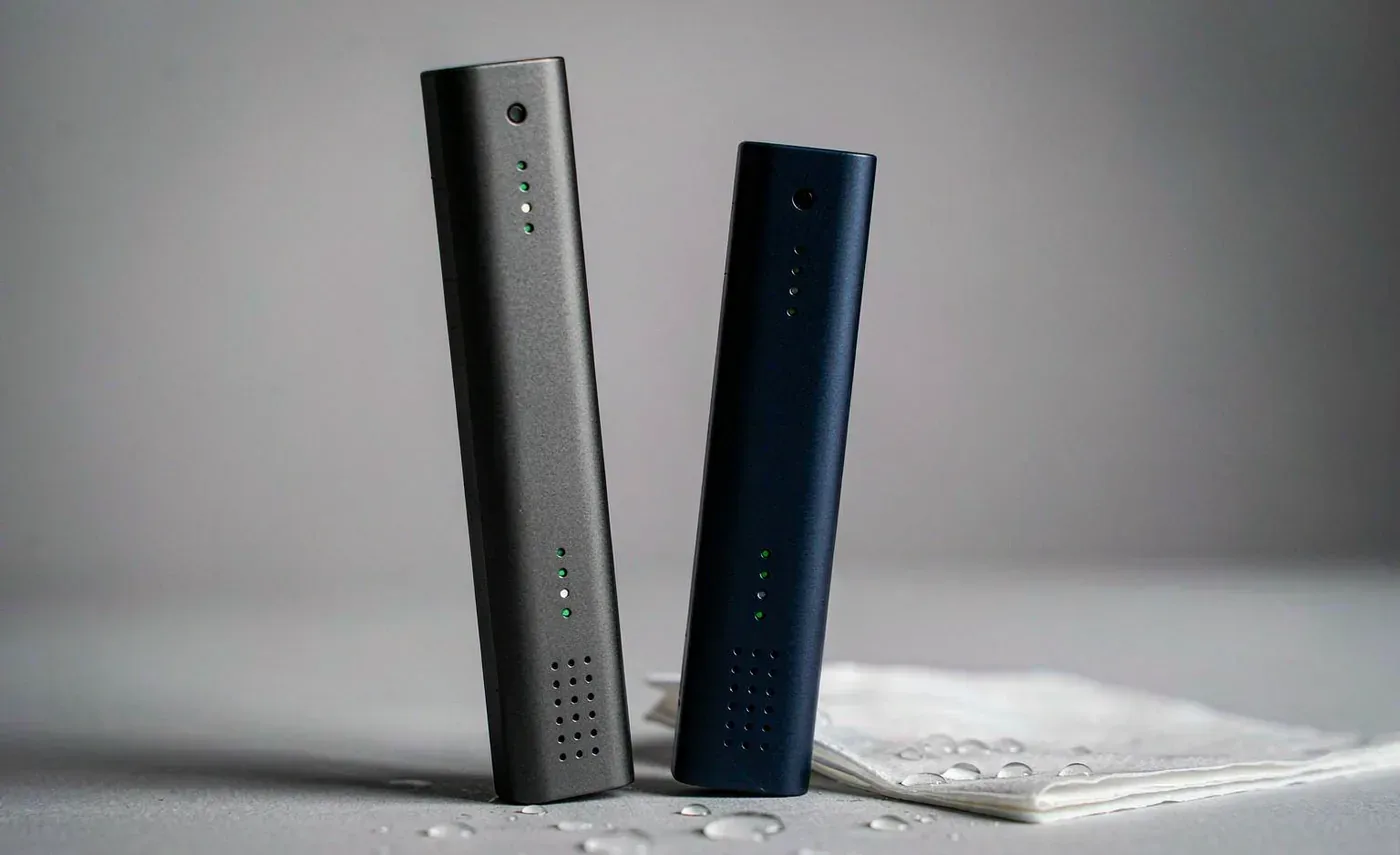
Condensation pools around the mouthpiece and base are the most common complaint; a tissue and upright storage are the first response.
Why an IGET leaks in the first place
The single most common cause is condensation, not a leak of the e-liquid reserve itself. When warm vapour meets a cooler mouthpiece or airflow channel, some of it re-condenses into small droplets. Over days of use those droplets pool, and eventually you feel a wet spot at the mouthpiece. This is normal physics, not a defect — our explainer on what causes condensation in vapour devices covers the mechanics in detail.
Genuine e-liquid leaks are rarer, but they happen when the internal seals are stressed. The usual triggers are storage on its side or upside down, leaving the device in a hot car or in direct summer sun (heat thins the liquid so it wicks where it should not), hard drops that crack the seam, and very long, forceful draws that pull more liquid into the airflow path than the device can re-absorb. In Australia the summer-heat trigger is the one most people overlook — our guide to hot weather and vape batteries explains why a car cabin is the worst place a device can be.
One more cause worth separating: age. Near the end of its rated life the wicking material stops keeping up, and liquid that is not vaporised can migrate into the airflow. If the leaking started only after the puff count was mostly used up, the device is telling you it is done — see how long a disposable vape actually lasts.
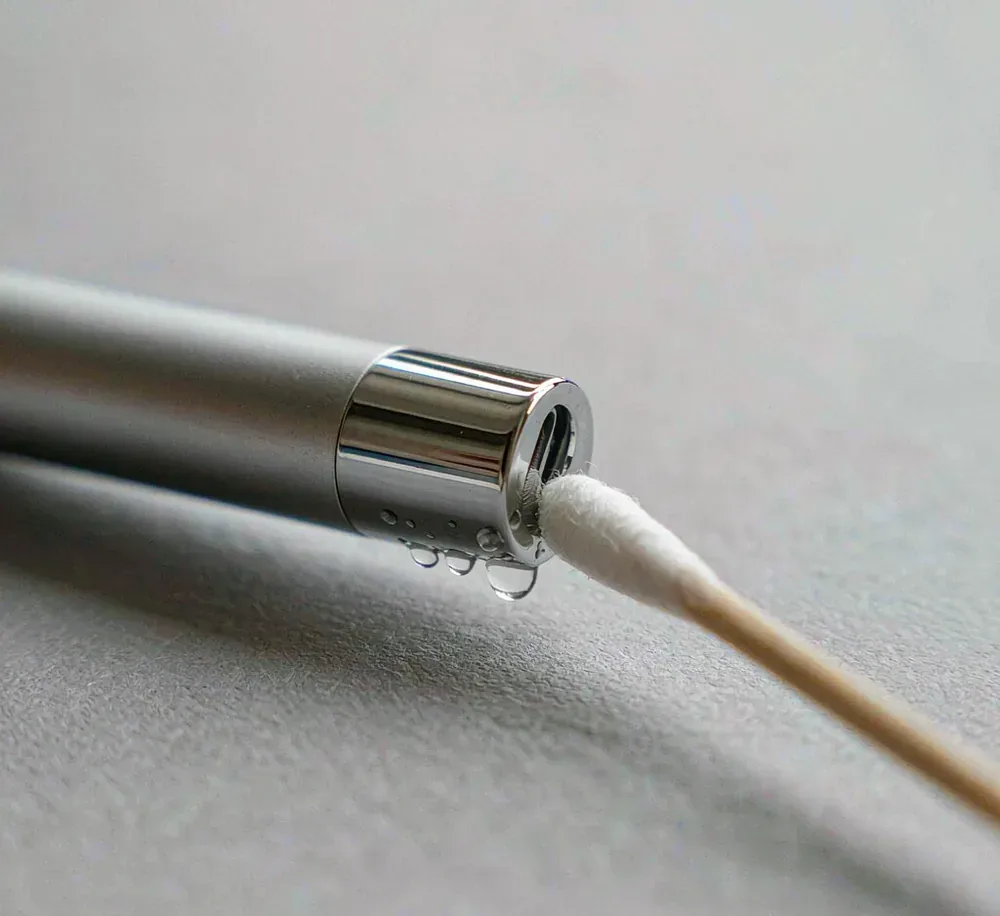
Wipe the mouthpiece with a cotton bud rather than drawing hard through flooded airflow.
What you can do about a leaking IGET
- Wipe, do not suck. Clear condensation by cleaning the mouthpiece with a tissue or cotton bud. Drawing hard through a flooded mouthpiece only pushes more liquid in.
- Flick it out gently. With the mouthpiece pointing away from you, give the device two or three short, gentle downward flicks over a tissue so pooled liquid leaves the airflow channel.
- Store it upright. Upright storage keeps liquid away from the seals and the airflow path. A shirt pocket with the mouthpiece up beats a bag or a bedside drawer on its side.
- Keep it cool. Shade, indoors, out of the car. If a device has been left in the heat, let it return to room temperature before using it.
- Shorten your draws. Long, hard pulls overwhelm the wick. Steady, moderate puffs are what the device is designed around.
If the leak continues after those steps, the device itself is the problem — a cracked seam or a failed internal seal cannot be repaired, and disposables are not designed to be opened. Replacements such as the IGET One 12000 and the IGET Bar Pro 10000 are sealed units across the range, which is the practical answer rather than a repair.
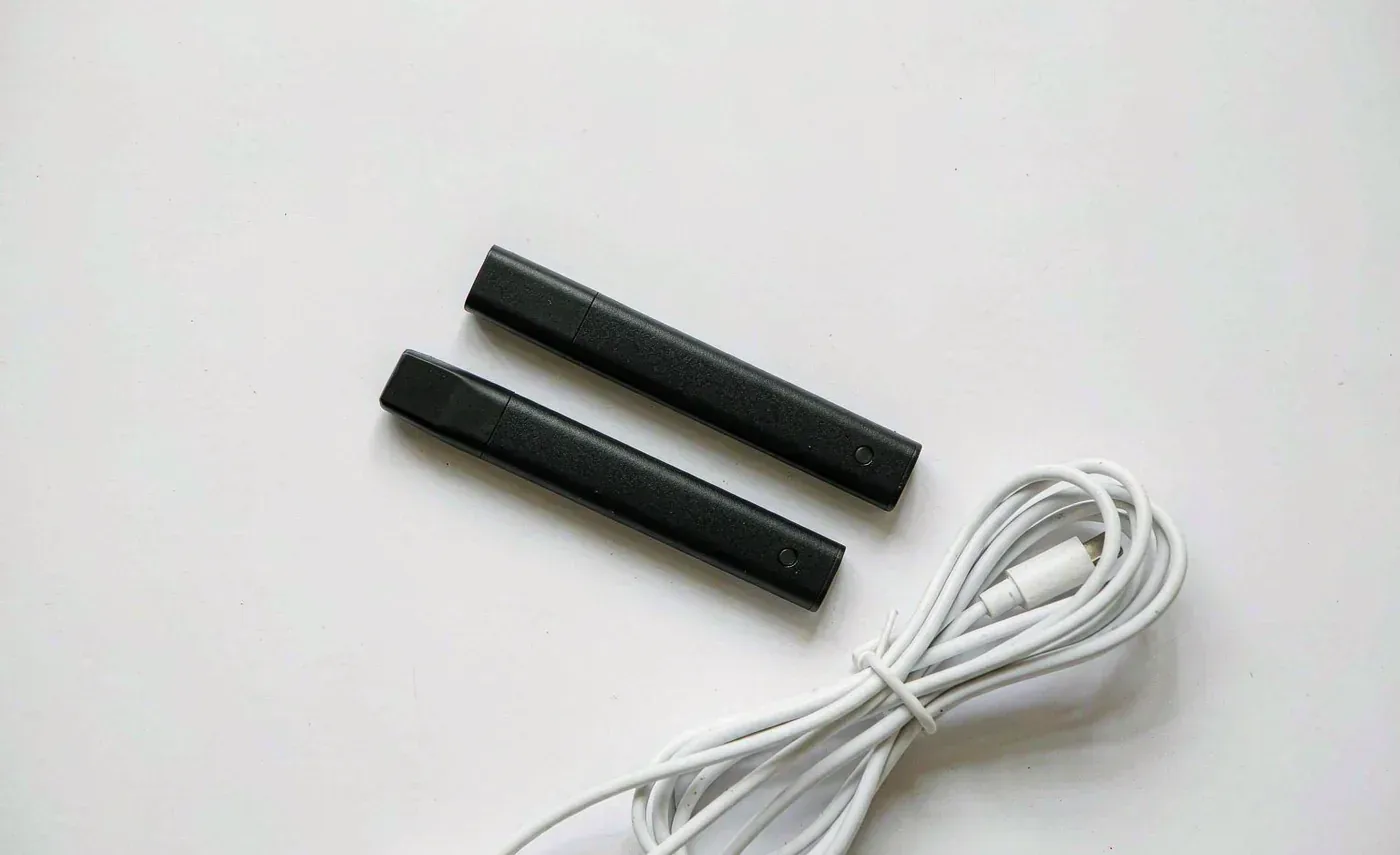
Keep devices away from liquid and store upright; liquid reaching the USB-C port is a stop-using signal.
When to stop using a leaking device
Stop immediately and dispose of it if any of these apply: liquid is visibly running from the bottom of the device, the leaking is continuous rather than occasional, the body is cracked or the seam has separated, or liquid has reached the USB-C port — a wet charging port can stop the device charging and is a warning sign covered in our guide to what a blinking light on an IGET means. A device that leaks to the point where it stops producing vapour is finished; the troubleshooting guide for a dead IGET walks through the checks before you replace it.
Disposal matters too: wrap a leaking device in paper towel inside a small bag and take it to a battery or e-waste collection point rather than general waste — the lithium cell inside is the hazardous part, not the small amount of liquid.
Frequently asked questions
Is a little liquid at the mouthpiece normal?
Yes. Small droplets of condensation appearing over days of use are normal in this device category. Wipe the mouthpiece regularly; it only becomes a real problem if liquid flows continuously or comes from the base.
Can I keep using an IGET after it leaked?
If it was minor condensation and the device works normally after cleaning and a day stored upright, yes. If liquid came from the base, the body is damaged, or the leak recurs after cleaning, stop using it and replace the device.
Why is my IGET leaking from the bottom?
A bottom leak points to a stressed or failed seal, usually caused by heat, a drop, or the device being past its usable life. It cannot be fixed at home, and a device leaking from the base should be retired and disposed of as e-waste.
Does leaking mean my IGET is fake?
Not necessarily — condensation affects all disposables to some degree. Counterfeits are more prone to seal failures, though, so if a device leaks from the base early in its life, check where you bought it and our IGET Australia guide for authenticity pointers.
Last updated: October 2026. Information is provided for adult users; individual results vary by model, batch and usage habits.