
The short answer to whether you can take a vape on a domestic flight in Australia is yes, with conditions: it travels in the cabin, it stays switched off, and it is never used on board or packed in checked baggage. Three sets of rules apply — aviation dangerous-goods requirements, airline conditions of carriage, and the vaping laws of the state you land in.
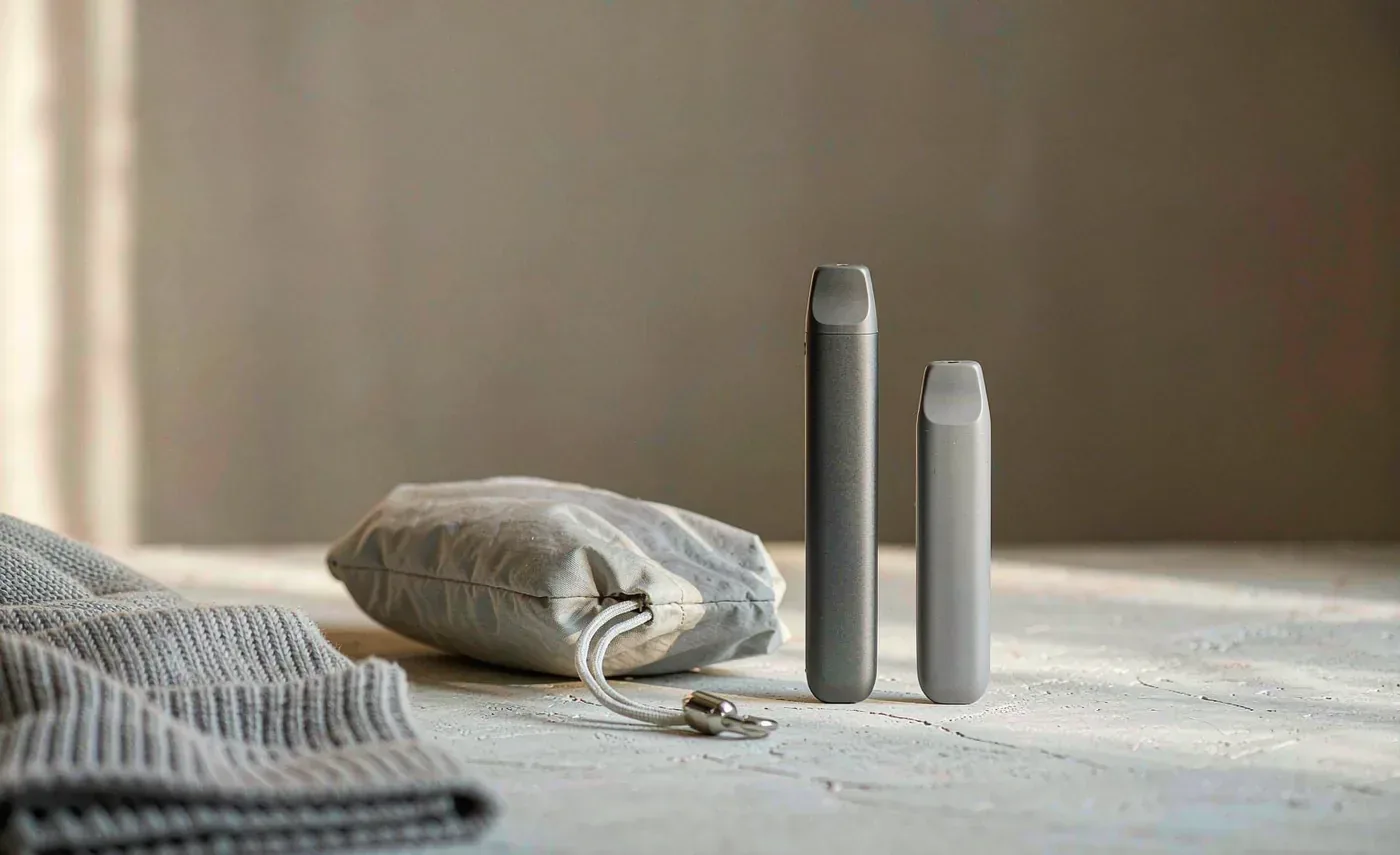
Two sealed disposable devices packed for travel: in the cabin they go, never in checked baggage.
Carry-on only: the battery rule
Disposable vapes contain lithium cells, and that fact drives the main restriction. Lithium batteries are treated as dangerous goods in the cargo hold, where a fault cannot be reached quickly, so vapes are not permitted in checked baggage. They must travel in the cabin, in your carry-on or on your person.
For a device that has to sit in a bag for a few hours, a compact body is easier to manage. The IGET Bar Pro 10000 is the shorter of the two main body styles, while the IGET One 12000 runs taller — a difference that matters mostly when fitting it into a small personal item.
At security: what to expect

A device travelling the way the rules intend: switched off, in a pouch, in the cabin.
A vape is screened like any other small device with a battery. Leave it in the bag if that is what staff ask for; separate it if electronics are being pulled out. Keep it switched off rather than in standby, and do not charge it from an airport outlet or a seat USB port. Carry it in a pouch rather than a pocket shared with keys, where the terminals can contact metal. This is routine and rarely delays anyone; problems come from packing errors — a vape in a checked suitcase, or a swollen cell.
Using it at the airport or on board
Australian aircraft are smoke-free, and that prohibition covers vaping. Using a device in a cabin or lavatory is not permitted, and cabin crew treat it as a safety matter rather than a courtesy one — the aerosol is visible and lavatory sensors respond to it.
Terminals are a separate question. Most Australian airport buildings are smoke-free throughout, including gate areas, and vaping is treated like smoking. Where a designated outdoor area exists, it is usually outside the secure zone or in a marked courtyard; read the signage rather than assuming a spot near a door is acceptable.
Vaping laws change when you land
Restrictions are set at state and territory level, so your destination may not match home. Distance from doors, covered areas such as bus stops and platforms, and outdoor dining zones are the usual pressure points. Australia also regulates the products themselves nationally, with nicotine devices treated as therapeutic goods supplied through pharmacy channels to adults — which is why the practical answer to "where can I use this?" depends on both postcode and product. Our IGET vape Australia guide sets out how the national framework fits together.
Flying with a nicotine vape
If the device contains nicotine, the supply rules do not disappear at the airport. Bringing nicotine vapes into Australia from overseas without following the prescription and import pathway is not permitted — a rule aimed at returning travellers rather than domestic passengers. For domestic flights the guidance is simpler: carry only what you could lawfully possess at home, keep it in its original packaging where possible, and do not carry devices for other people. Check current Therapeutic Goods Administration guidance if you are unsure about a product.
Packing it without damage
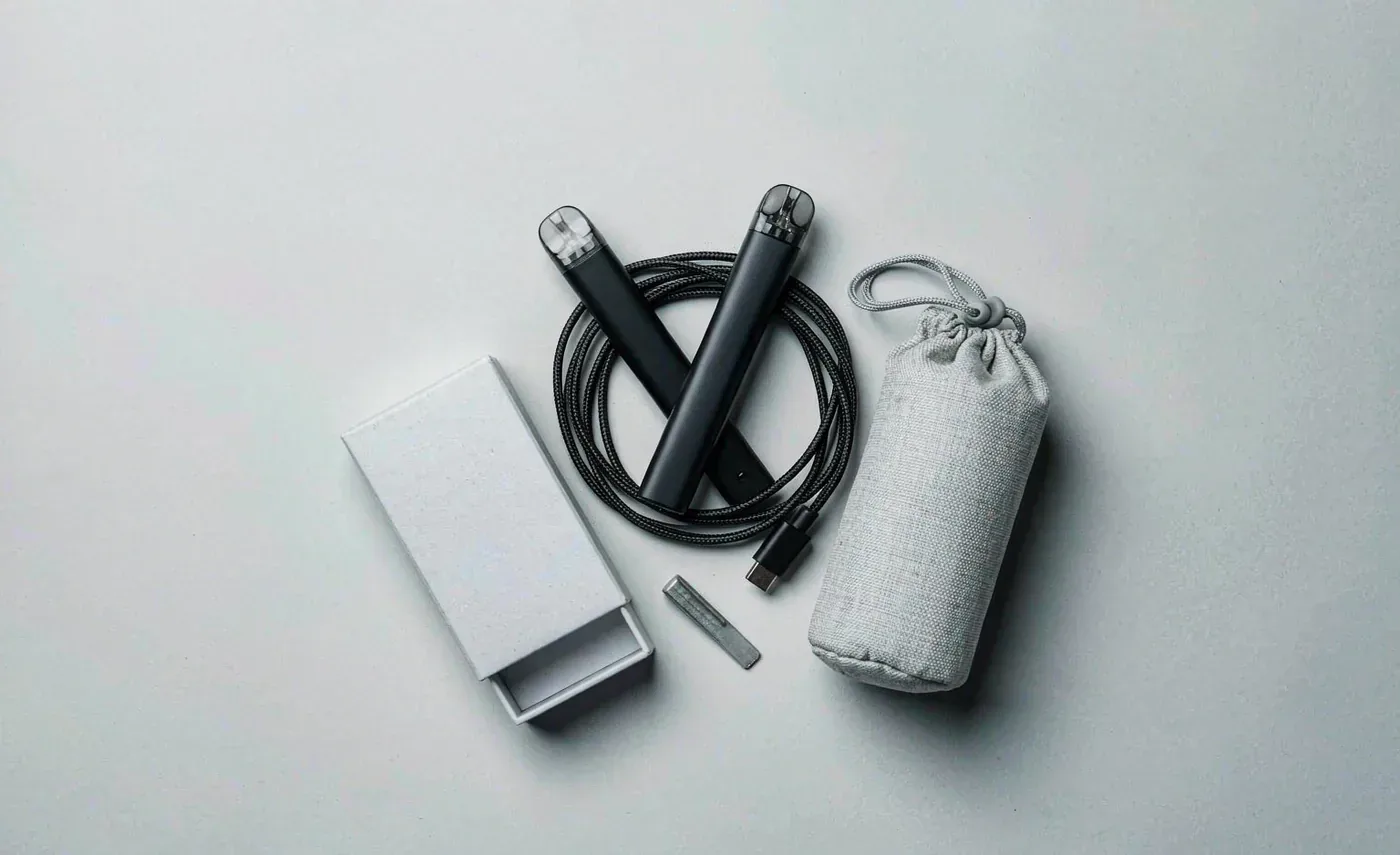
Upright in a rigid pouch, terminals away from metal: the whole packing routine in one frame.
A disposable is a sealed unit with a battery, a reservoir and a pressure-sensitive air path, and cabin pressure changes are gentler than anything in the hold.
- Keep it upright in a rigid pouch, mouthpiece up, so e-liquid does not sit against the air path.
- Protect the terminals from keys and cables; a short circuit is the failure mode that matters in an aircraft.
- Avoid tight packing against hard objects that could crack the shell.
- Expect some condensation after a flight; moisture in the mouthpiece usually clears after a few puffs.
Let the device return to room temperature before use if it has been in a hot car on the way to the airport; flavour and vapour both suffer at extremes. The hot weather battery guide explains why, and the condensation guide covers the moisture side.
Common questions
Can you take a disposable vape through security in Australia?
Yes — it goes through the x-ray in your carry-on like any small electronic device. The restriction is on stowage, not on screening.
Can you put a vape in checked luggage?
No. Lithium batteries are not permitted in the hold, so the device must travel in the cabin.
Can you vape inside an Australian airport?
Generally no. Terminal buildings are smoke-free, and vaping is treated the same as smoking; use a designated outdoor area if one exists.
Do the same rules apply on international flights?
Cabin stowage is similar, but import rules are not. Bringing nicotine vapes into Australia is restricted, so international travel needs checking before departure.
For short trips, sealed units with no settings keep the routine simple: the IGET Bar Pro 10000 Chupa Grape and the IGET One 12000 Chupa Chupps Grape are both in that category. If a device behaves oddly after flying, start with the not-working checklist; for how long one lasts between trips, see how long a disposable vape lasts.
Last updated: November 2026. Cabin baggage rules, airline conditions and state vaping laws change; confirm details with your airline and the relevant state health authority before travelling.