
What affects puff count in real use comes down to four things: puff length, battery performance, storage conditions, and how the coil and e-liquid hold up over time. The number on the box is a laboratory estimate, so everyday habits can move your actual total by a noticeable margin. Here is each factor, and what you can do about it.
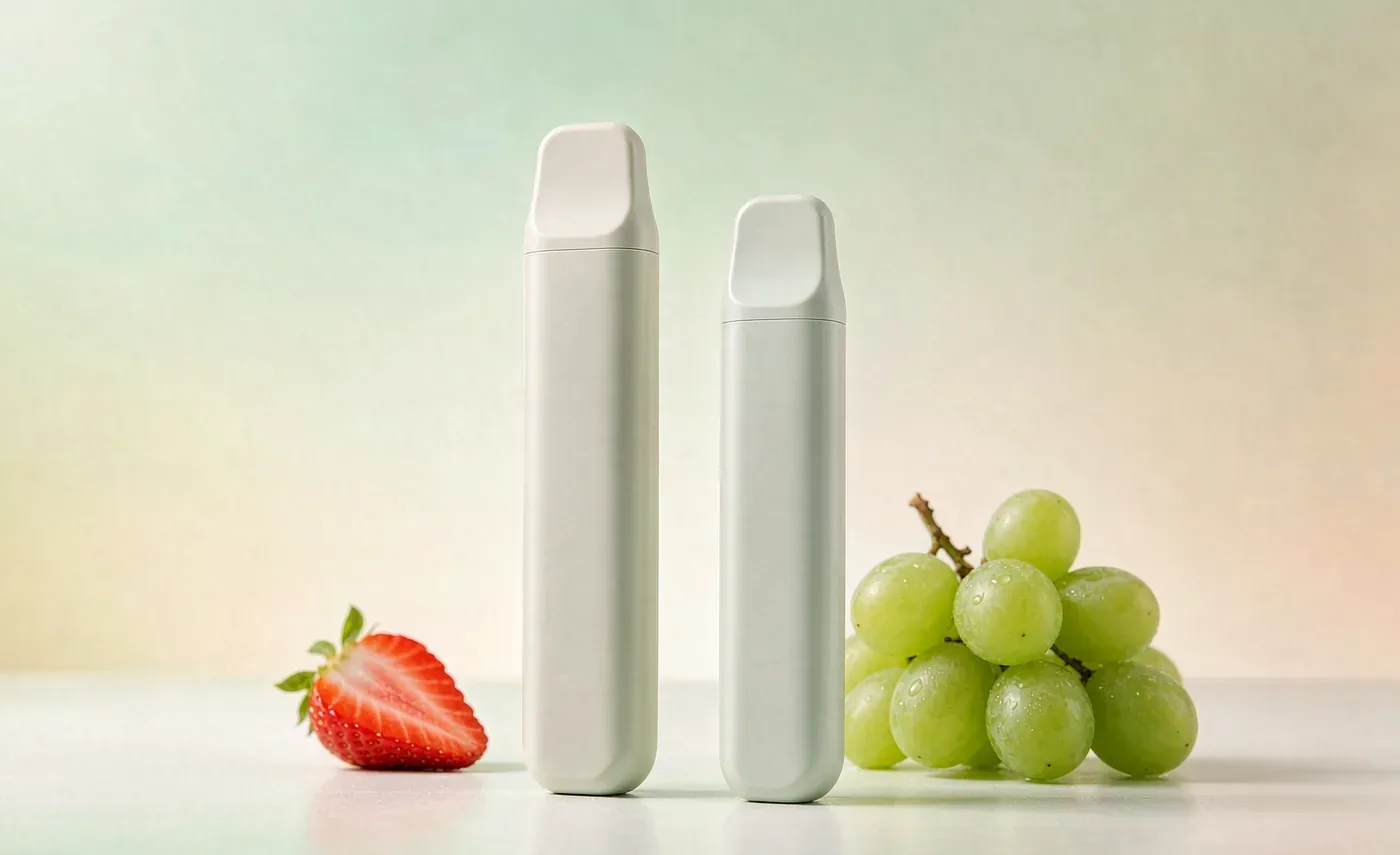 A disposable vape resting on a clean surface — the box number is an estimate, and daily habits decide the real total.
What the puff count on the box actually measures
The rated figure comes from a testing machine taking short, controlled draws of one to two seconds under ideal conditions. Real users rarely puff that way: some take relaxed three- to four-second draws, others quick, firm pulls. Because e-liquid is consumed roughly in proportion to the total seconds you inhale, draw style matters more than almost anything else: every three-second puff costs about the same as two shorter ones. For how estimates compare between models, our guide to how long a disposable vape lasts breaks the maths down further.
Puff length and frequency: the biggest variable
If you want one takeaway, it is this: puff length is the single largest factor. Chain vaping plays a role too, because rapid consecutive draws heat the coil beyond its resting temperature, vaporising liquid slightly faster and thinning the flavour along the way. Pausing twenty to thirty seconds between draws lets the wick re-saturate and stretches the liquid further. It also explains why two people with the same model report different totals.
Battery output and coil condition
Later in a device's life, the battery delivers less voltage, producing a cooler, lighter draw. This rarely changes how much liquid each puff uses — but a lighter puff feels less satisfying, which pushes many people to take longer draws to compensate. That habit quietly eats into the remaining count. Coil condition matters too: as a coil ages, deposits build up on its surface, and vapour can weaken or taste off. If a device produces barely any vapour, our walkthrough on why an IGET vape might not be working covers the common causes.
Temperature, storage and airflow
Where you keep the device matters too. Cold thickens e-liquid, so it feeds the coil more slowly and vapour turns thin until the device warms in your hand. High heat thins the liquid, and a hot device can leak or taste sharper. Extended heat is also hard on the battery, as we explain in our article on whether hot weather can damage a vape battery. Storing it upright at room temperature, away from sunlight and lint that can block the airflow holes, keeps each draw consistent.
 Warmer days thin e-liquid and cooler days thicken it — storage temperature quietly shapes every draw.
Flavour style and liquid type
The flavour you choose has a smaller but real effect. Sweeter dessert-style blends leave more residue on the coil than lighter fruit blends, slightly reducing vapour output over time. Mesh-coil devices such as the IGET One 12000, hold their flavour profile more evenly than older wire-coil designs. Airflow matters too: a tight draw often encourages longer inhales — the real cost driver.
Practical ways to get closer to the rated count
- Keep draws to around one to two seconds rather than long drags.
- Pause briefly between puffs so the wick stays saturated.
- Store the device upright at room temperature, out of direct sun.
- Don't leave it in a hot car or a freezing pocket overnight.
- Keep the airflow holes clear of lint.
None of these steps change the character of the device — they just remove small inefficiencies that add up over thousands of draws. For the recharge side of the picture, see our piece on charging frequency and performance looks at how recharge habits fit into the same picture.
Comparing rated counts across models
Rated figures are most useful for comparing devices, not predicting an exact personal total. The IGET Bar Pro 10000 and the IGET One 12000 differ in capacity and coil design, yet a heavy-draw user may finish either equally fast. If flavour consistency matters over a long device life, the Chupa Chups ranges — like the IGET Bar Pro 10000 Chupa Strawberry — show how a mesh coil keeps a candy-style blend recognisable from early puffs to the last. When a device underperforms early, our guide to what causes condensation in vapour devices explains a common, easily fixed culprit.
 Side-by-side details: capacity and coil design, not the box number alone, shape how a device performs day to day.
Frequently asked questions
Why did my device run out faster than the box said?
Usually longer draws than the test standard, often plus chain vaping or heat storage. The rated count assumes short, spaced-out puffs at room temperature.
Does a bigger battery mean more puffs?
A bigger battery supports the rated count, but liquid capacity and coil efficiency decide the ceiling. A device with charge left but an empty tank still stops producing vapour.
Do shorter puffs really make a difference?
Yes. Liquid use roughly tracks total inhalation time, so consistently shorter draws can meaningfully extend how long a device lasts.
Is it bad to use a device right out of the cold?
Not harmful, but expect thinner vapour until the liquid warms up. A few minutes indoors restores a consistent draw.
Last updated: November 2026